

Working Principle of Ultra Dust Collector Crushing Unit
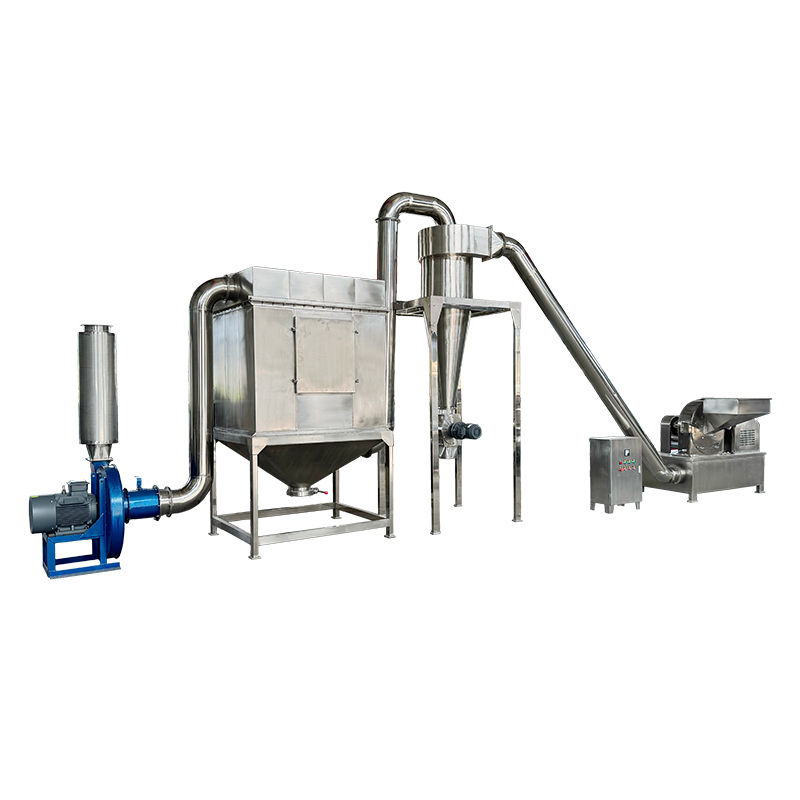
This integrated machine combines material crushing, powder collection, dust purification and exhaust emission into one system. It operates under fully sealed negative pressure without dust leakage, consisting of four coordinated modules: crushing main body, aggregate separation bin, pulse dust removal cabinet and negative pressure air inducing system.
1. Foundation of Negative Pressure Operation
The high-pressure induced draft fan at the tail continuously extracts air, forming stable negative pressure inside the whole unit. The air pressure inside the feeding port, crushing chamber, pipelines and dust collector is lower than the external atmospheric pressure, so dust can only flow inward, completely preventing outward flying dust.
2. Crushing & Comminution Process
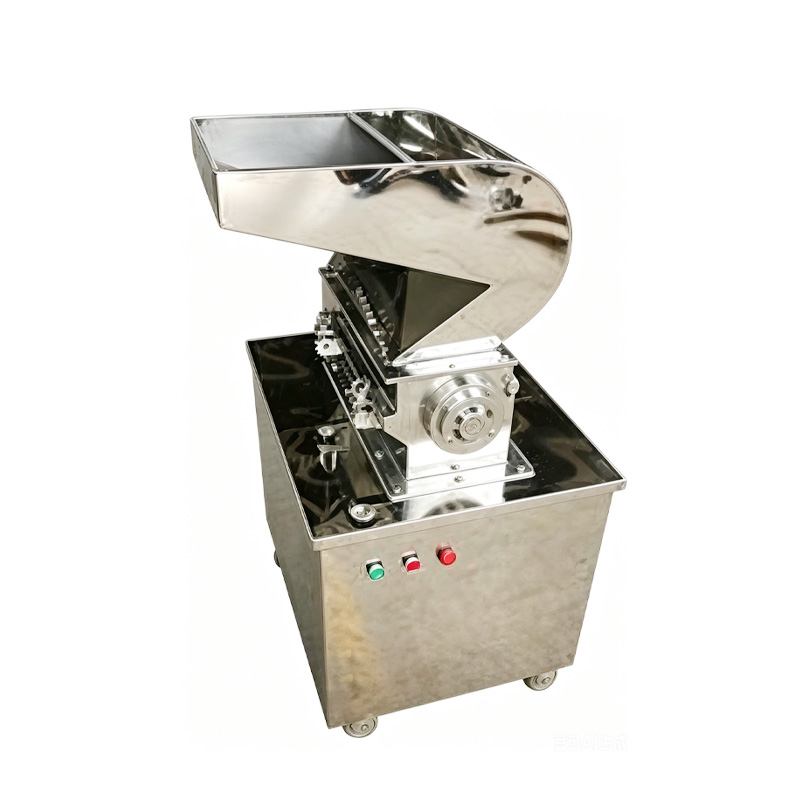
Materials are fed into the crushing chamber through the sealed feeding inlet.
High-speed rotating gear discs, hammer pieces or blades impact, shear and grind materials. Hard ores, plastics, medicinal herbs and chemical raw materials are crushed into particles and powder of different fineness.
Large particles are repeatedly impacted and ground inside the chamber. Qualified fine powder is carried away by negative pressure airflow, while coarse particles remain inside for further crushing.
3. Cyclone Pre-Aggregate Separation (Primary Sorting)
Mixed airflow carrying powder after crushing flows into the cyclone collector:
Centrifugal force is generated by rotating airflow. Qualified powder with higher specific gravity is thrown to the cylinder wall and slides down to the bottom hopper for collection.
Light ultra-fine floating dust is discharged upward along with upper airflow and sent to the rear bag dust removal unit.
Function: Recover most finished products first, reduce load on rear filter bags and raise powder recovery rate.
4. Pulse Bag Dust Purification (Secondary Fine Filtration)
Airflow containing tiny fine dust enters the dust removal cabinet:
Air passes through multiple membrane-coated filter bags; fine dust is blocked and adsorbed on the outer surface of filter bags, while clean air penetrates into the air chamber.
Equipped with pulse ash cleaning system: high-pressure compressed air is released regularly to blow filter bags reversely, shaking off accumulated dust which falls into ash hoppers for unified recovery.
PTFE membrane-coated filter bags achieve filtration precision up to 0.01μm with 99.99% dust removal efficiency, enabling clean exhaust discharge up to standard.
5. Exhaust Circulation & Closed Loop
Purified clean air is exhausted outdoors via the induced draft fan. Some models adopt internal airflow circulation: clean air flows back into the crushing chamber to reduce heat loss and energy consumption, suitable for low-temperature crushing and explosion-proof working conditions.
Simplified Closed-Loop Process
Feeding → High-speed crushing and grinding → Negative pressure pneumatic conveying → Cyclone coarse powder collection → Ultra-fine dust bag fine filtration → Automatic pulse ash cleaning → Standard clean exhaust emission
The whole process runs in sealed negative pressure with extremely low finished product loss and no dust pollution in workshops.
Optimized Principles for Special Working Conditions
Explosion-proof type: Burst discs, anti-static filter bags and nitrogen inert protection are installed on chambers and dust cabinets to prevent deflagration of lithium battery and metal dust.
Low-temperature type: Cooling water circulates through interlayers of crushing chambers to lower grinding temperature rise, suitable for spices, resins and heat-sensitive medicinal materials.
GMP sanitary type: The whole machine is made of 304 stainless steel with mirror polishing, free of dead corners for easy cleaning and cross-contamination prevention, applied to food and pharmaceutical crushing.
 Whatsapp